
The Kemper Player: But Does This Device REALLY Sound and Feel Like a REAL Tube Amplifier for Guitarists?
Kemper Player! A cheap way to get a Model 2 review 2026

Kemper - I have had them for years, but what's it like?
Introduction and Preamble
You know what, I have owned a Kemper guitar amplifier (I'll call it that) since the start... my first video review was with Dan Kelly, a great guitar player that was in one of the bands I was in back in the middle of the 1980's and on. While Dan stayed in the Music Business as a job, I never really did it to the extent of having to make a living from music. I had different skills really, and honed those accordingly. But Dan stuck with the music.
Somewhere after the bands, when I had enough of the agro, squabbling and much more I stopped being in bands and that was back in 1993. But I always kept in touch with Dan, as well as another friend, one Alan Bruce - who I met through studio recording bands. In any case after releasing an album called 'Eniac' with Alan Bruce in about 1996 (yes time flies) I started to create video reviews on YouTube. And in January 2012 I made a video with Dan Kelly about a thing called a Kemper Amplifier that claimed to be able to capture guitar amps basically so you would not have to buy one, just load up the 'sound' of the amp and away you go. Here's the Kemper Amp I video reviewed in 2012... And man at that time the Kemper was entirely revolutionary and changed much in the guitar world for guitarists - that was 15th January 2012!
And you know what, I had bought the Kemper 'geeks handbag' as it was called in those days for a princely sum of £1170.00 from Thomann at the time just a month before the review. Honestly, those were exciting times to see a product that never existed before and as you see in that first review above how exciting and great that amp simulator or modeler (call it what you will) really was. but you know what, Now the Kemper amp had a hole around the back as you see below:
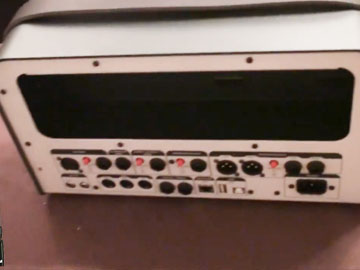
And Kemper had a 'powered' Kemper amplifier, but for anyone that wanted the 'power amp' internally, Mr. Christoph Kemper said "oh no problem, we're going to release a 'plug in' power amp so it's all fine to buy the non-powered version" and I for one took him at his word. But sadly, basically they never did release a power amp upgrade for the 'geeks handbag' version. Me? Well I have to say I never trusted Kemper again and never believed a word they said. But I did not really like the 'geeks handbag' and later I sold it and bought a Kemper Rack version which fitted the studio better. But once again I bought the non-power version. Fortunately a company in Germany released a power amp upgrade I fitted that to my Kemper Rack and that was a 2x90 watt affair which was fine. That upgrade came from Ritter Amps in Germany.
Of course over the years since, I have bought stereo power amps rack versions and also used them. Along came Line 6 Helix and I bought a floor unit, again later replacing that with a Helix rack. But this is all about Kemper right? Since those days of power upgrades (in 9th February 2015) I have used the Kemper amp and always felt that it was one of the best amp simulators or 'modelers' out there. In fact I created profiles of every amp I owned at the time and uploaded them to be shared with the Kemper site where even today you can download those 'profiles' that I made those years ago.
Moving forward the Kemper amp I felt was starting to go backwards, and by January this year it was about 14 years old and no hardware mode that they told you about. That's a long time and certainly my guess is that the processor board (it plugged in inside the amp) may well have been upgraded, but Kemper kept tight lipped about all of that. In May 2025 Kemper announced the 'Mark 2' version of their amplifier modeler but scarily, just looking at the Kemper Mark II it looks (dare I say it) the same externally but with a color change. Why was I surprised? I was not!
And of course along came the Kemper Player
which is where we start this review, but the important introduction
is relevant because without all of that information you might have
'half a picture' so to speak. In December 2023 (read 2024 really) the Kemper
Profiler Player became a modeler player that you could actually buy. So what
did you really buy, and is it a replacement for the Kemper amp?The Kemper Player
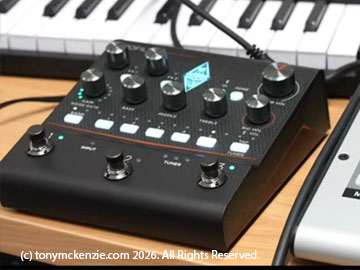
When the Kemper player was first released (I bought mine in January 2024) there were many rumors on the internet, that Kemper (remember him) was going to charge users to 'turn on' extra features that did not come with the Kemper profile player when you first bought it. That created lots of discussions and whether these 'benefits' would come for free, whether the player would only ever be 'just a player' and other similar questions would abound. Wait for answers later in the review.
What's in the box?
Of course there's the Kemper Profile Player itself, there is an
included power supply, there are four rubber feet, and a Kemper
profiler player sort of few page manual. BTW if you want
a 'proper' Kemper Profile Player manual can be downloaded here
so you can take a look at it yourself. It's all a bit boring really
so let's move on a bit. I have always felt that what's inside the gear I
buy really does matter? You would not want to buy something that becomes so
'yesterday' 6 months after you buy it would you? Of course not, but some
makers 'hide' what they are selling and ensure that reviews don't cover what
you're really buying. So I'm going to tear the Kemper Profile Player apart
to see what it's really made of.Inside the Kemper Player
Control PCB
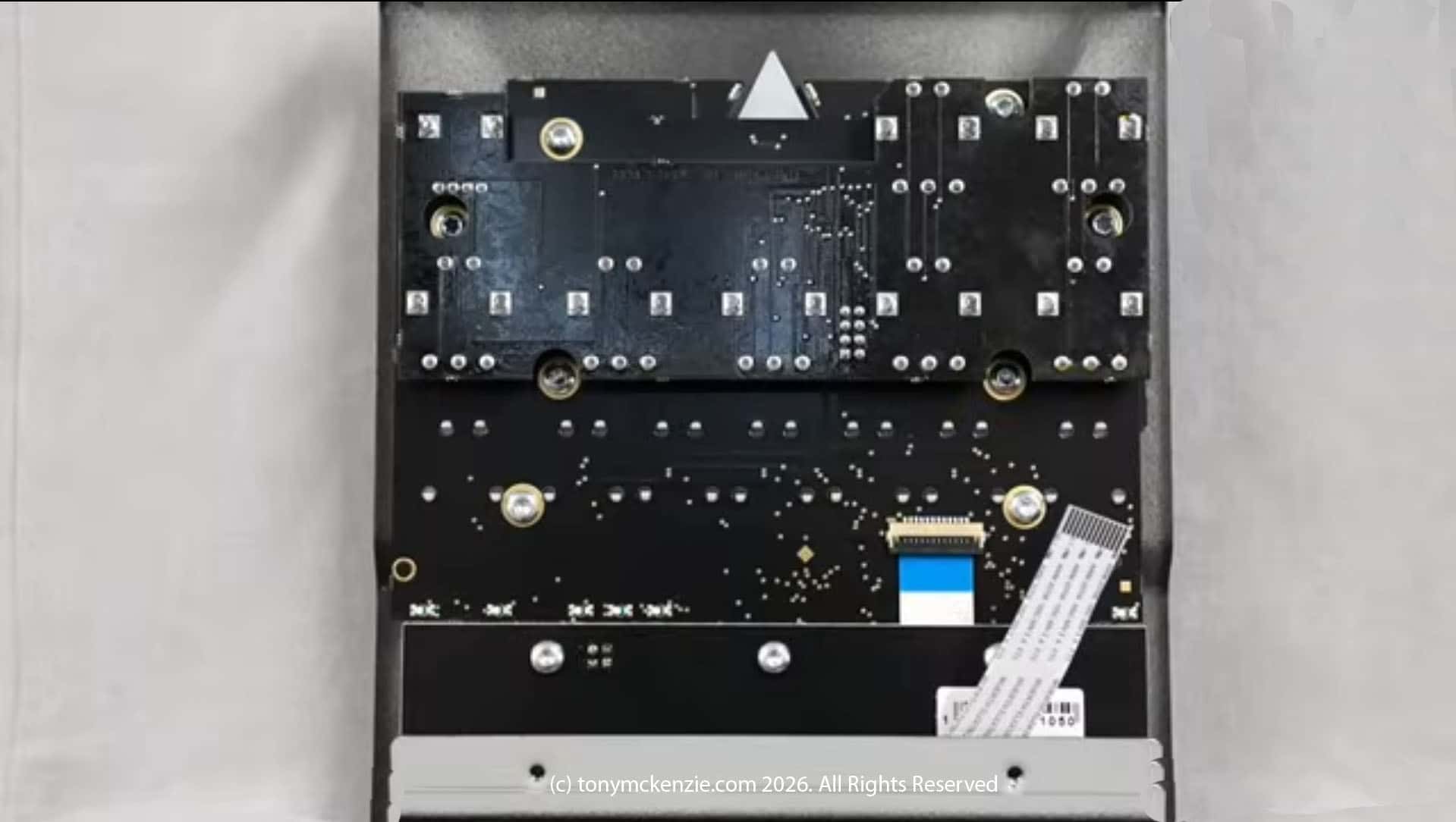
What you are seeing is the top half of the Kemper Profile Player where the controls are - basically on the other side. What's important about it really is the level; of quality that is being shown of that top control PCB. You can see the ribbon connector that I disconnected so I could show this top part easily, and really, while this PCB has been made on a flow solder machine or similar its pretty much as I had expected. In fact though, there are FOUR small boards, three you see and a smaller one underneath that top board that all have switches and controls.
Here's a shot of the pots on those control boards from another angle.
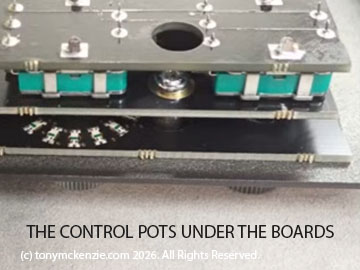
As you can see these pots are the smaller green type I guess not that dissimilar to those on modern Marshall amps. Notice that neither here or on those other PCB's I could not find a 'Made in *' so we shall see about origin later. Fair enough quality, so let's move on.
Main Processor Board
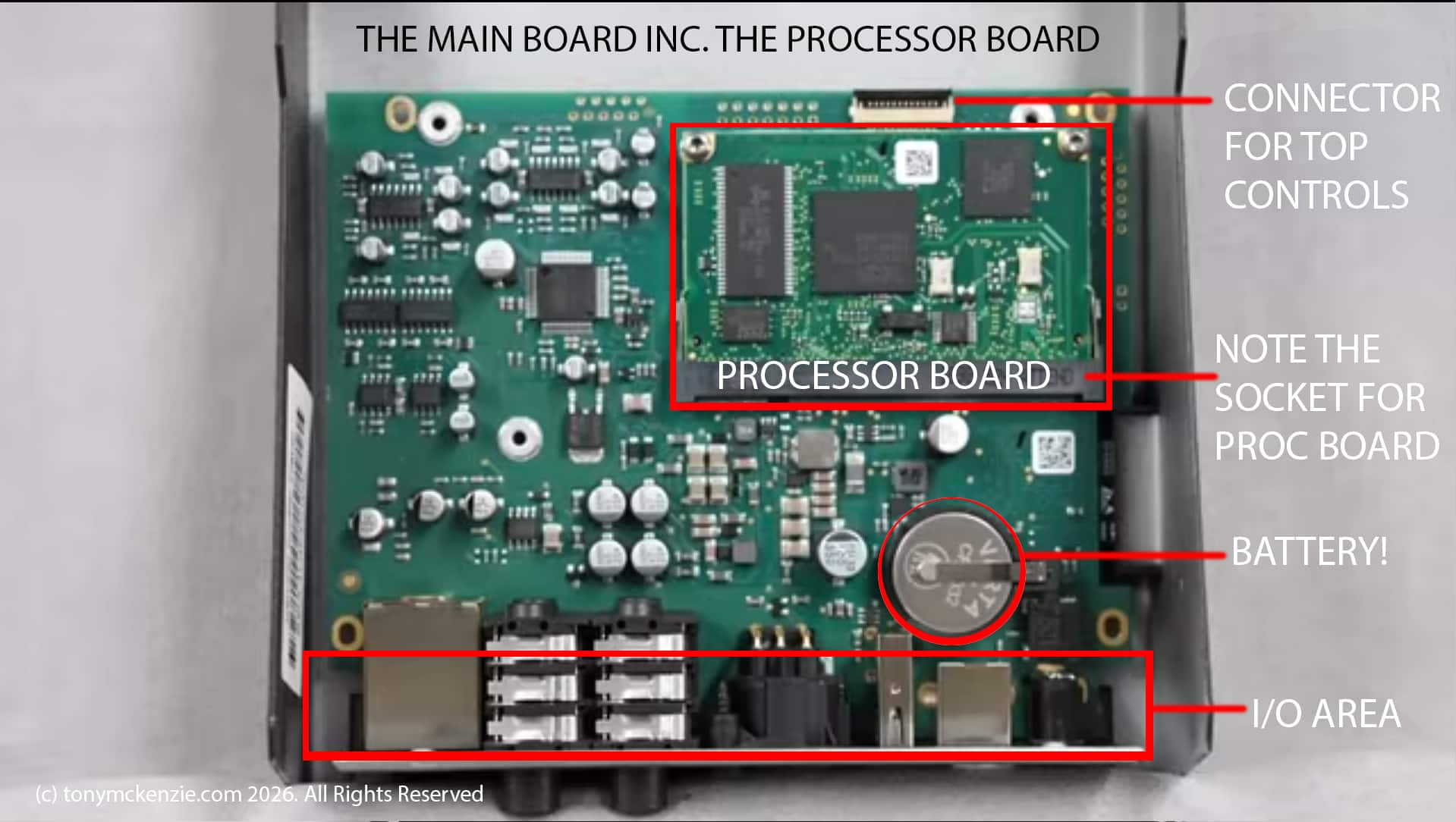
Looking inside the Kemper Profile Player for the first time, you can see (click the image) the main processor and its memory is mounted on a daughter board that I'll call it the processor board here. Now, I can tell you that board is VERY similar to the Kemper profiling amp inside that I had years ago and you can check it out in a video I made years back if you want. This design methodology is why I have a view that maybe those earlier profilers from Kemper might have had processor upgrades because Kemper made it easier to do, rather than scrapping the whole device, they could just 'plug in' another one with newer technology. Maybe that's how they got the longevity of those old devices. And here it is again in a similar vane - and that's a good thing. I often wondered why Kemper never released an 'processor upgrade' because clearly it could have likely been done. Just conjecture of course.
The Battery
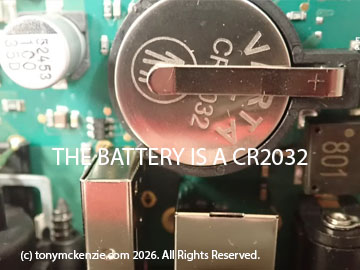
The second thing immediately noticeable is that darned battery. No-one told you about that did they? I have not seen it in ANY documentation anywhere that I can download. And of course, while it's not a problem, it could be. Imagine owning one of these devices and some years down the road it just stops because of that battery, it's a pity you did not know about it, and then you trashed it! Get the idea? It's always better to know about this stuff rather than just hiding it inside.
Processor Board Close-up
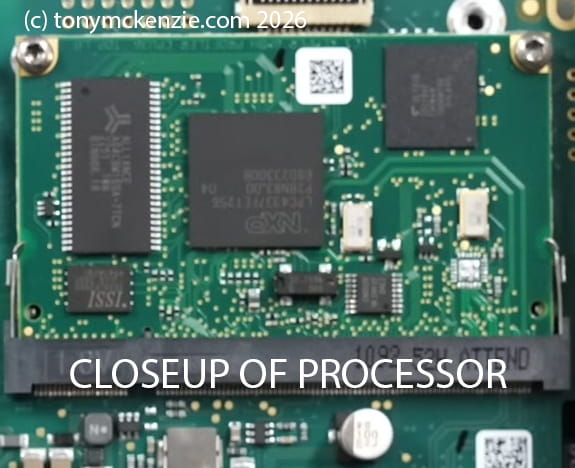
Yep, just unscrew those two top screws and that board will just pull out.
Processor NXP LPC4337 and that has some memory inside. Memory is Alliance AS 4C8M16SA/7TCN I think. The third large chip is a QL7935 and an ISSI chip an IS25 LP2560 chip. On the main board is a Cirrus Logic chip CS 424 38-CMZ and well take a quick look at these chips later in the review.
Under the Main Board
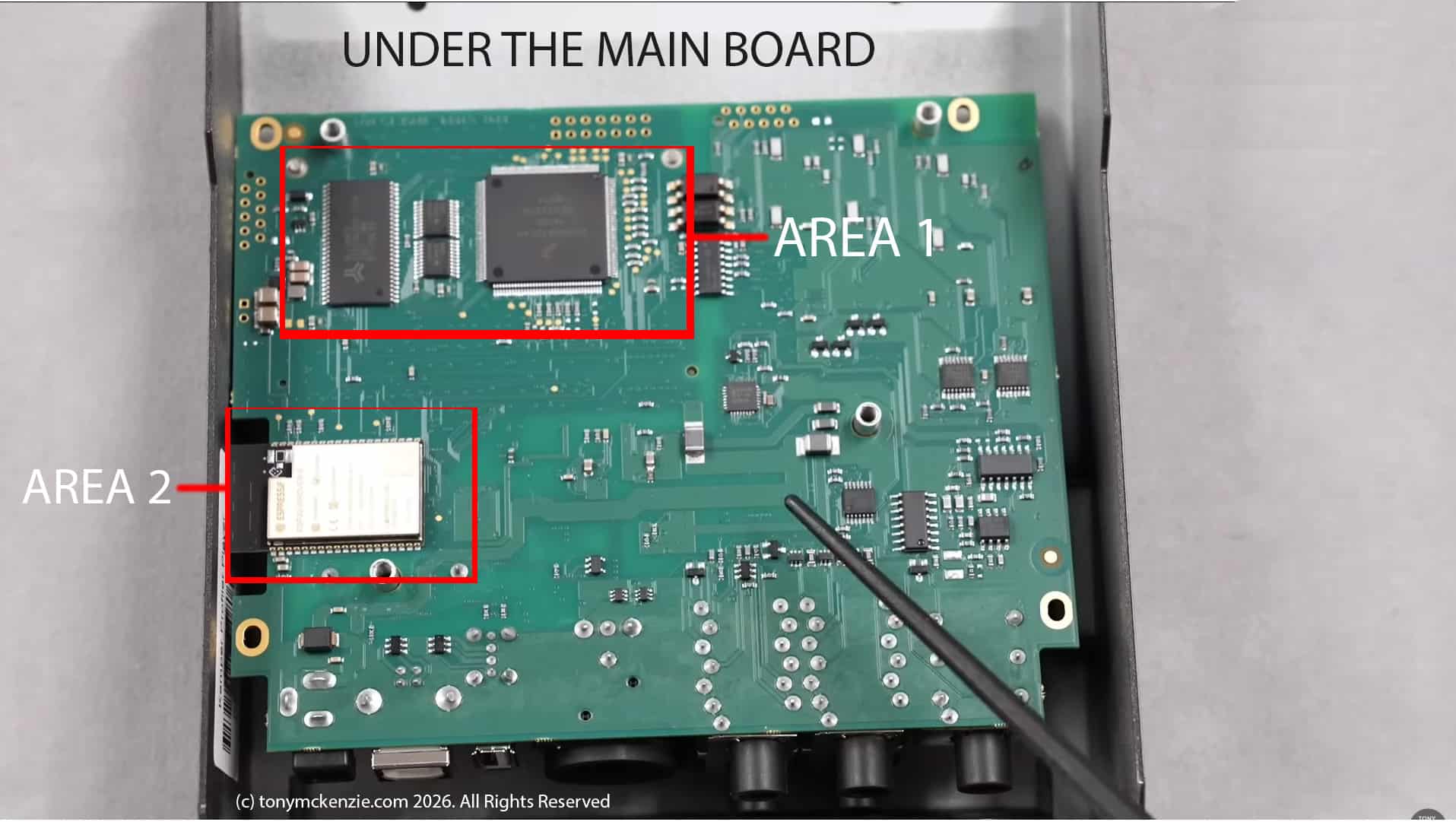
Area 1 holds a DSP Processor type is DSP 856720 AG chip - another Alliance brand, and the other chip is a memory chip from Alliance also - as indeed there was one on the other side of the board.
In area 2 shown as that silver component made by ESPRESSIF and is the ESP32-WROVER-E that handles (I believe) the Bluetooth etc. for the Kemper Profiler Player and again we'll cover this stuff a bit later in this pretty in depth 'inside and out' review. It's unlikely you will find any of this information in any other review and in particular those 'sponsored' reviews that generally do nothing but play a guitar.
One thing, is can you imagine trying to resolve an issue on this double sided board that may even be multi-layered for all I know? All I could surmise with that is if you are not used to working on such gear (think computer main boards at the least) and don't have the repair equipment to do it honestly that could be very problematic.
I should mention also that this main board has at least FOUR other possible connections without any components inserted on the edges of the board, who knows what for, but maybe this board is used as part of some other Kemper equipment? or even maybe there could be 'other versions' of the player to come? It's impossible to know as Kemper are always tight lipped, but I guess we shall see.
This side of the board is made to high quality though and if I did not know better I would relate it to sort of Roland Boss quality, so top marks for that, but I guess all the machines make about the same quality, right?
Ports on the PCB
If you looked on the main PCB by clicking it, you will notice
that most of the I/O ports are actually soldered directly to the
main PCB. Some of them are made generally of plastic and those over
time could become damaged through use. Needless to say that would
not be covered by any warranty so repairs here we come. But also
those connectors might suffer from cracked track connections on the
item itself or on the PCB, so bear that in mind if later something
stops working and you'll know where to look first :) and tell it
Tony sent you. I think it's time to take a cursory look at the
top controls and what they do (not really in depth) and consider if there
are any compromises from this control layout.Top Controls on the Kemper Profiler Player
Kemper Player Top Controls
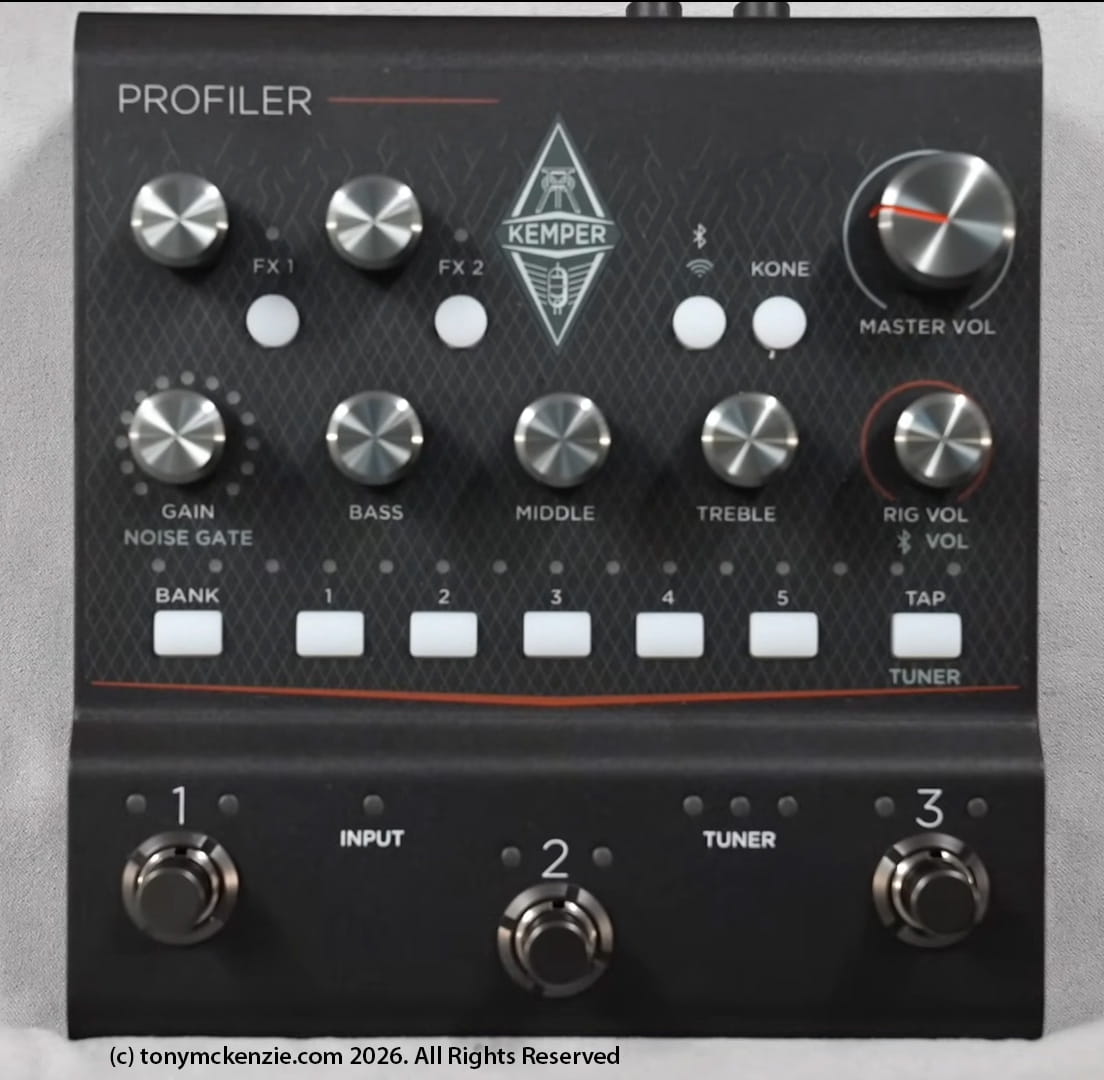
Firstly - when you turn on the Kemper expect a wait while the unit fires up.. its about (maybe) 30 seconds or so, so its nothing like the Helix Stadium that took the record for turning on and getting ready to use.
Taking a look at the top of the Kemper Profiler Player it's not really rocket science! The controls are laid out in a reasonable way and are for the most part quite understandable. So lets take a quick analysis of the controls:
- The buttons at the bottom are the foot controls - and note
just three. While that's probably OK in this case, the Fractal
Audio FM3 with it's three foot controls was a nightmare. In this
unit 1 and 3 buttons are previous and next rig, while button 2
toggles the effects.
- The 'bank button' chooses the banks and has a little light
that tell you where you are. And those other buttons (1-5) are
for choosing the rig number within the bank you selected.
- There's an input led for monitoring the input signal as well
as a tap / tuner button - guess what those do :)
- The middle knobs comprise of a gain knob (which also
controls the noise gate by pressing and turning at the same
time) and a bass, middle and treble control knobs.
- On the right there's the rig volume knob, and again press
and turn controls the Bluetooth volume.
- At the top right is the master volume control knob. This
controls the ANALOGUE outputs and its setting is not stored in
any rig I believe.
- The FX1 and FX2 are controls for effects and those can be
assigned per rig and stored. Those little LED's show different
colors depending on which type of effect is in use. Those small
buttons just below that turn FX1 and FX2 off or on. Now on those
FX1 and FX2 knobs you can press it and choose a second effect
which is interesting really so its basically a two plus two
control of effects.
- The KONE button is used to connect this device to the Kemper
KONE cab.
- The Bluetooth button enables the Bluetooth audio
transmission. Again its a two use button. Hold this one down and
it activates Wi-Fi.
- Wi-Fi/BT supports mobile phones of the Android type as well as the Apple iOS type!. You will probably use this feature with your smart phone.
Overall not a bad layout, but the two button use can be a bit fiddly especially on the BT/Wi-Fi use I thought. Other than that it's quite a good attempt at creating far more out of far less buttons than would otherwise have to be created.
I/O on the Kemper Profiler Player
We should take a look at the I/O because its an important area and if something is missing that you use, well tough!
The Rear I/O
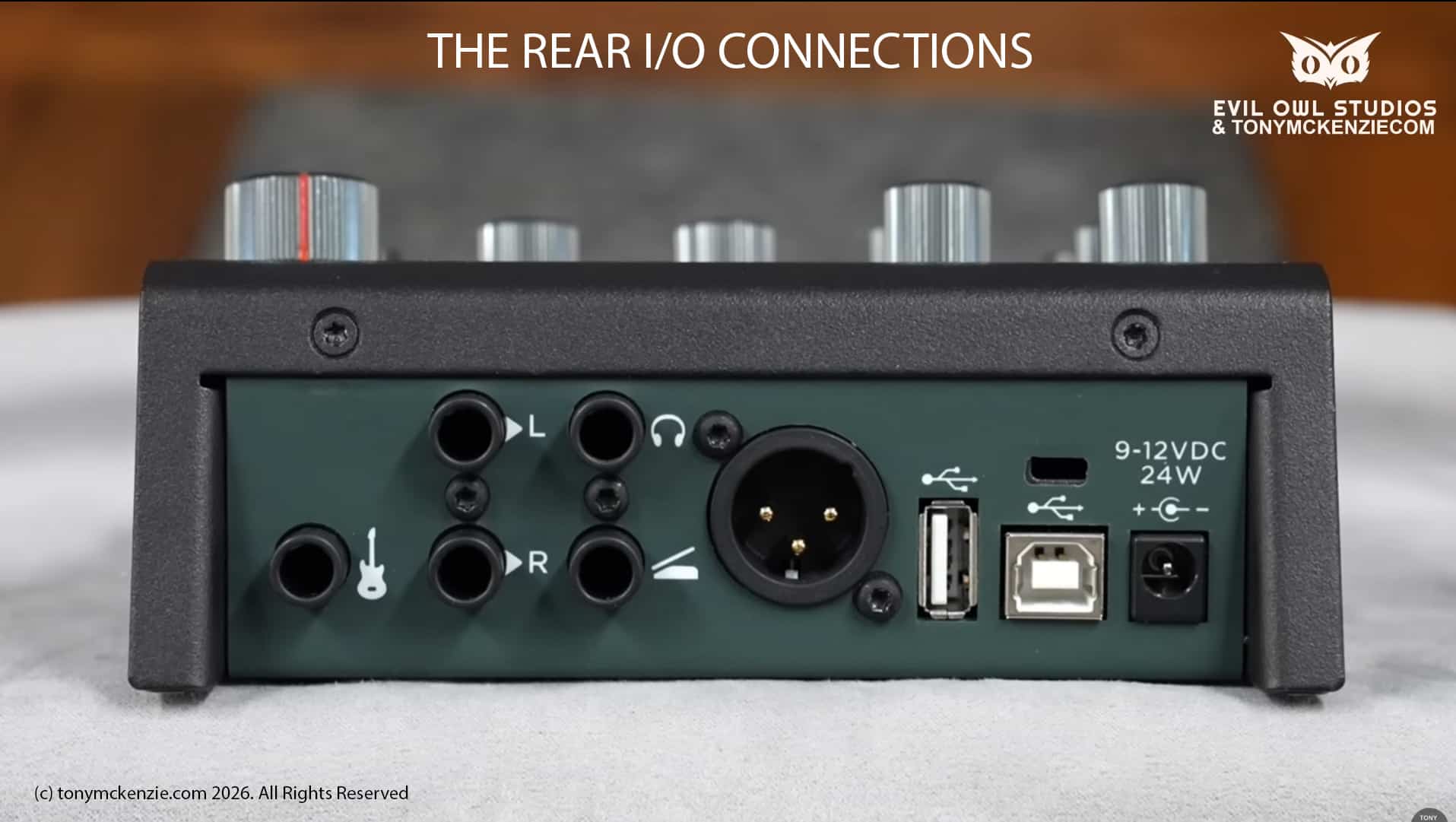
The rear I/O on this Kemper profiler player I would not call 'spectacular' but hey, this device is not hyper expensive but it does have many of the IO ports that someone might want. I know for me, its fine, it integrates easily in a recording studio and the simplicity of the I/O of course contributes to the ease of use, so I'll run through them now so look at the little icons, or click it for a larger view, but I'll be referring generally to the icons.
- The guitar in is the input for your guitar. I guess you
could use other instruments? or not - I never did try that.
- There's a Left and a Right outputs as 6.3mm jack sockets for
monitoring etc.
- There's a headphones socket also 6.3mm (good!) and that is
in stereo.
- There's a control port for a volume pedal but undoubtedly
you can associate it with other features than just volume.
- That big fat XLR is the main output for the Kemper Player,
but sadly that's just in mono. You could of course use the L & R
for stereo though.
- There is a USB Type A and a USB Type B on board, one for DAW
use and the other probably for control or firmware maybe?
- There's a Kensington lock above the USB type B.
- Lastly its worth noting that the Kemper player can handle input voltages from 9 to 12 V DC -a 2.5 Amp, and the outside connector for the power is positive - so you can use the Roland Boss power supply that you see me using a lot.
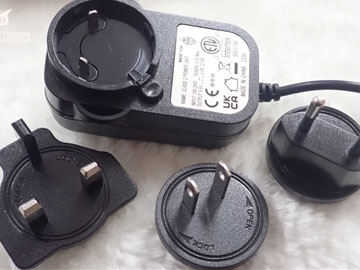
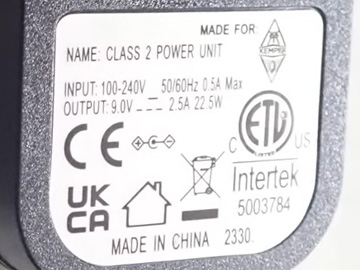
The power supply IS included - its a Chinese affair as you might see. It's made by Intertek and is a third party power supply, labeled as 'made for Kemper' but probably an off the shelf international design. It claims CE approvals, along with UKCA, is an isolated power supply, and has a WEEE logo. Personally I prefer to use the Roland Boss unit and although I have to buy that, personally I feel much happier with the Roland supply that seems to be made better in my opinion. I noticed no 'address' on the power supply which I believe is a requirement of some of those approvals, but hey, what do I know. While I'm sure the PSU is functional, I'll stick with the Roland Boss one.
The Processors & Chips in the Kemper Profiler Player
I always cover the processors, memory and other chips in all of my inside and out reviews and for good reason, you would not want some old chip in new gear would you? So I'll describe (quickly) some of the chips used in the Kemper Profiler Player.
I mentioned earlier the aspects of chips becoming obsolete and that aspect could be really a bad thing if you buy a product (any product) that has obsolete parts or chips inside it, mainly because well, think like this, who wants yesterdays PC's or mobile phones? Some do of course, but most people usually want the latest tech in there right? So it does have a bearing for any review, and any that do NOT discuss the components in this way are surely giving you half a review. Let's proceed.
Main Processor(s)
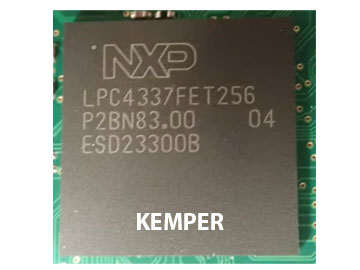
The Kemper processor is an ARM Cortex M4/MO MCU micro controller running at up to 204 MHz, with 1M of flash and 136 Kb of S-Ram. There is integral Ethernet on this chip, two high speed USB's, and LCD end EMC. There are hundreds of lines of information about this chip but I'll stop here, suffice to say that it costs just £11.93 or $ equivalent so it's a cheap device. Do note that the Kemper has another processor too on the back of the board.
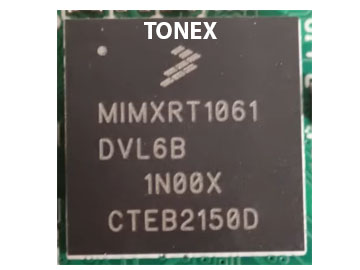
As a comparison of processors I thought I would mention the Tonex processor as a sort of comparison. That is an NXP DSP B56720AG. Its a 24 bit Symphony DSP the maker says is not recommended for 'new' designs? Take of that what you want, but that was there on the spec sheet. Its a dual DSP 56300 cores, its 284K x 24bit words, it has a synchronous sample rate converter on board (an ASRC) that allows multiple data rates in the system. It has S/Pdif transceiver on board, there's an external memory controller (EMC), it is basically an enhanced audio interface that comprises of four modules... and this processor is guaranteed supply for 10 years after launch - but the spec sheet I looked at was February 2009?... I could go on but I'll leave it at that for this processor. BTW this one costs around £20.29 in the UK in small numbers but will be cheaper in high quantities. Check the NXP DSP B56720AG specifications here. Or you might want to read the Tonex Processor Specifications.
The Tonex processor is an ARM Cortex M7 which I guess is better than the M4 but hey, you can't have everything can you. The Kemper has two devices and I only saw one in the Tonex.
Memory
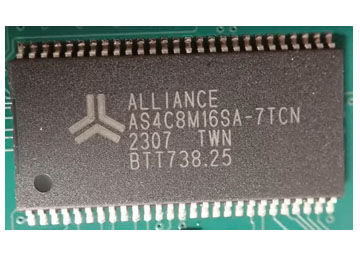
The memory chip(s) is an Alliance AS4C8M16SA-7TCN number and is 128x8Mb synchronous D-ram with 5ns of fast access. It costs just £1.86 if you buy a few and more if you buy many! You can check the specs of the Alliance AS4C8M16SA-7TCN here.
A to D or D to A Chips
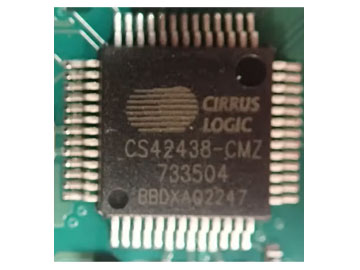
This Cirrus Logic chip is a CS42448 that's a 108dB 192Khz, 6 in (analogue to digital) and 8 out (digital to analogue) codec but it handles both the A2D and the D2A functions on one chip. It can use single-ended or differential inputs or outputs. Comes as a 64 pin LQFP package. I won't list it all out as you can check the specs of the Cirrus Logic CS42448 here. It has a cost (if you buy just one) of £8-10 pounds or $ equivalent and much less in volume.
Bluetooth & Wi-Fi Module
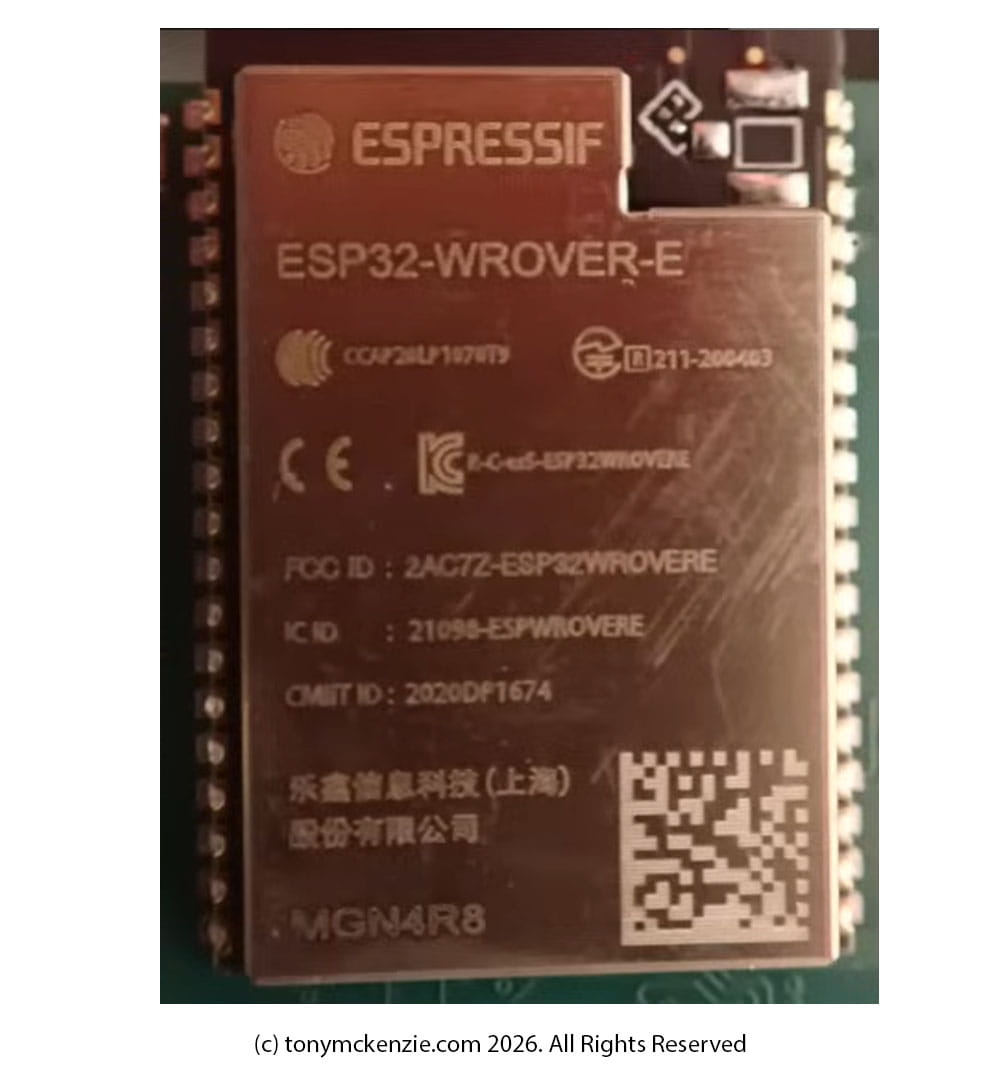
The ESP32-WROVER-E module handles the Bluetooth and Wi-Fi features
of the Kemper profiler player. This is a bought in device that is
commonplace and I have seen this exact device in other modeler or
amp simulators for a while. This module offers industry leading
specifications -
check the specifications of ESP32-WROVER-E here. Although this
is a great device it costs just £2.60 or $ equivalent if you buy
just one... and less for numbers! So I'll give an opinion of the hardware quality
inside and out of the Kemper Profile Player so far...Hardware Quality of the Kemper Profiler Player
After taking such a close look inside the Kemper Profile Player its pretty clear that this unit is high quality, especially for that price (Price is later in the review). Some of the other products I have reviewed over the years honestly have been really not very good, with different problems, and sometimes those problems echo through other units. But if you were to take something made by Roland Boss for example, you will find top quality for a reasonable price. Sure enough that gear has the odd questionable design factor (in the same way that this Kemper does) but there is a standard that these sort of products are standing up to and in general there is little to dislike. It's likely that the Kemper player will last some time.
Other Thoughts So Far
This Kemper player was something that I have liked a lot, and there is far more to consider than what I have discussed so far, like the software, like the thousands of profiles online to download for free, like the price... its not bad, and of course like the tones that you can get out of this unit. While I am aware of the Mark II Kemper and the software, that may or may not update this player, and even if it does, this modeler has stiff competition to contend with in the form of the TONEX device.
So what's special about TONEX? First off the Tonex unit CAN actually capture tones whereas this Kemper player (I did not check if MK II changed things for the player) cannot. And there are other aspects of the Tonex, like price, that give it a huge advantage some might say. Me? To be honest, I reviewed the Tonex system some while back, the support was awful, I had software problems that were TWO YEARS old without answers, and to be honest I was really not impressed.
On the other hand, Kemper has always had good support, from people (at least on their Kemper forum) that are passionate about the Kemper products and support when you need it is priceless. And think about this, it's why I am singling out Tonex - for a bad experience with little support of a genuine problem. I rated the unit down because of that. Kemper has always been good in this respect.
User Manuals
You get a couple of very thin manuals, one they call a user guide
and one for registering the gear, and setting up the Bluetooth etc.
None of that is really a proper user guide. But thankfully there IS
a real downloadable manual that you can print or not if you want to,
you can see the Kemper player manual here. That manual should be
more helpful. Kemper have always made good downloadable manuals for
guys that want them, but I have to say with many other companies
that's being dumped these days for a online only manual and without
the ability to download it. This downloadable manual was 160 pages
of useful info. Have you ever tried to read a manual on your phone?
Don't waste your time, so again Kemper scores with this approach. I should list a few tech specs for the Kemper,
after all it's based on technology? right?A Few Technical Specifications for the Kemper Profiler Player
Here are some Specifications:
- Size is: 2.68 inches high x 5.71 inches wide by 6.53 inches deep
- Weight: 2.45 Lbs.
- Analog input is a quarter inch TS unbalance
- Dynamic Range is greater than 108dB with Impedance of 1M
- Main output is analog and is +4DBU (pro standard)
- 2 x monitor outputs 1/4 inch and again +4DBU
- Headphone output again 1/4 inch TRS output stereo that's 32 to 600 at 32 Ohms (thankfully)
- The pedal input is 1/4 inch TRS for single/dual switch or one expression pedal that's 10K Ohms to 100K Ohms maximum impedance
- USB x 2 USB Type A and USB Type B with audio (8 channels) over one of them and the audio is 44.1Khz - needs Win 10 Rev 1703 or newer.
- Wi-Fi is 2.4 Ghz double UPA 2 PSK for security
- Audio playback over Bluetooth
- Electrical: 9 to 12v DC 21 watts - connector is + outside.
- There is no on or off switch.
- Temperature: Between 41 and 113 Fahrenheit or 5 to 45 Centigrade
- Humidity is 5 to 95% non-condensing
- FCC verification and likely CE approvals etc.
That's enough for the specs right...
So Why Kemper?
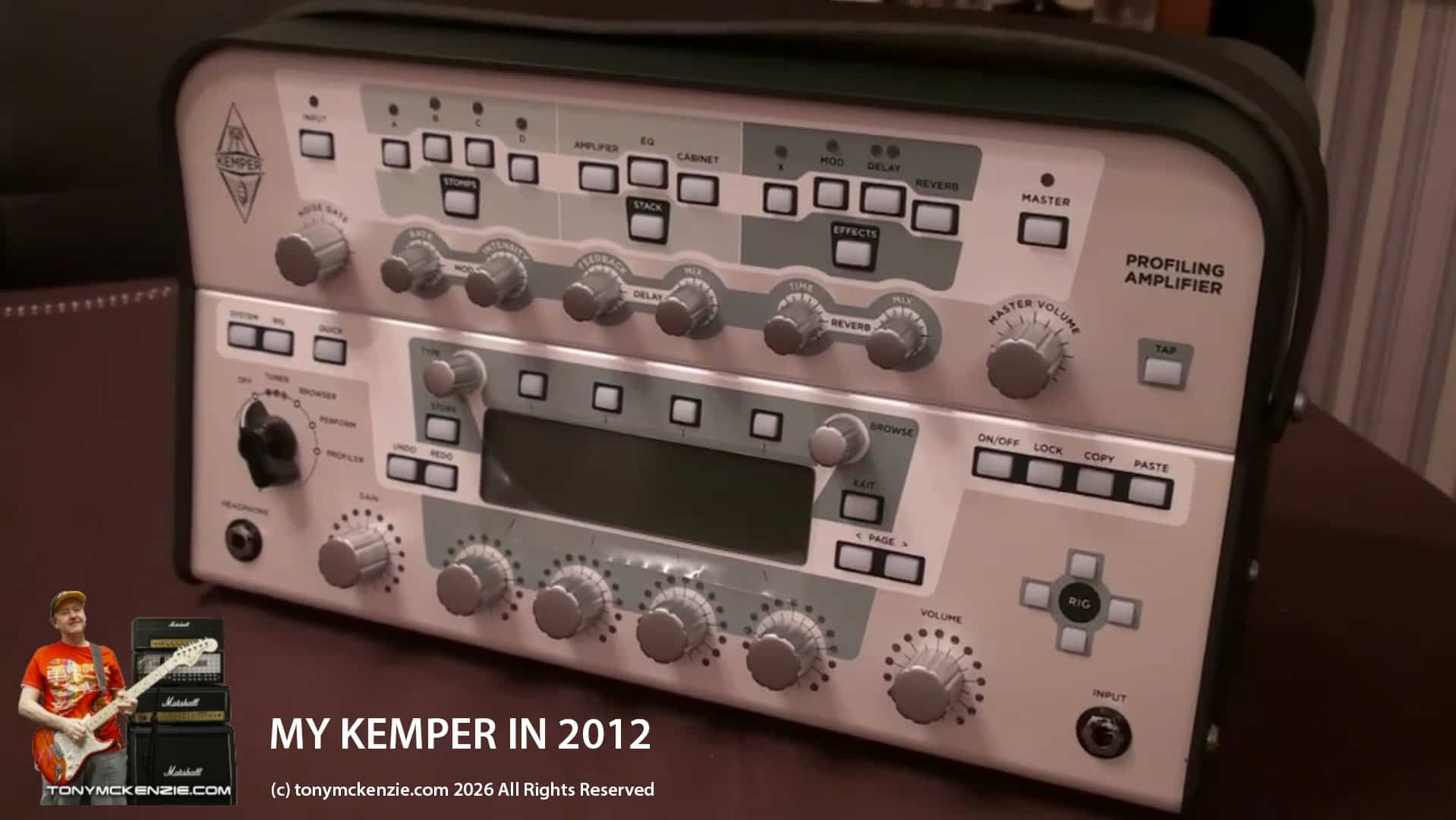
Well there are plenty of reasons why the Kemper product has stayed with me since January 2012. In general though, it has always been for the sound. No, not the quality, not the warranty, not Kemper themselves, but that sound. As far back as I can remember since buying a Kemper I have literally never been without one. My first 'geeks handbag' is right there above and you can look at a bigger image by just clicking that one. Disillusioned with Kemper because they at the time 'made things up' about fitting the power amp to the 'handbag' I was ready to dump it all.
But I did not! Along came the rack version and so I bought that instead and silly me I bought the non-powered version because it was cheaper. I have already mentioned Ritter amps etc. earlier in this review, suffice to say that I did upgrade this rack - but to be honest in a studio it's not what I use (the power amp that is) so that was a wasted thing as far as I was concerned. But I also bought a FRFR power amp stereo unit and Ha I hardly ever used that either.
You see, you can get perfectly good tones right out of the Kemper amp which ever version you have... even today! But I can confidently say its the sound that keeps me with Kemper. But I also created some profiles of my amps at the time, some of which I don't own now, and I STILL use those profiles today. They are available to download still - they are version 1 but hey ho who cares - they sound great. You can download them from the software for free just search for tonymckenzie.com as the author.
I was put off a little by Kemper at one time many years ago in about 2016 I think it was. I went to the Music Messe in Germany to have a good look around for new gear and I saw the Kemper 'caravan' (I'll call it that) so me and my wife strolled over with camera in hand to see anything new inside... and while they said nothing to me, I was greeted with a sort of sneer by Mr. Kemper and his buddies but I paid no attention and we left clearly not that welcome. Maybe he was not happy with the informative reviews I have always created, but whatever, who really cares? Not me.
And when the Kemper Player appeared out of thin air I immediately bought one of course to check. This review is my findings of said product. Now there is a Version 2 of the Kemper amp and I'm at a crossroads whether to buy it or not. You see, for me, the Kemper sounds are fine as they are. Scarily Kemper always said that, but since Version 2 I guess their attention these days is to promote version 2 - you know what I mean. I remain semi convinced about the V2 scenario, and my opinion (without owning or seeing one) is that if you changed that processor board I have shown in this review for something new, and give it a lick of paint then maybe, just maybe, that would be what I would have. For now I'm happy with V1 and we shall see how it all moves forward, but yes I am STILL a Kemper user.
I also always liked the software. Before they had an editor it was
not the best of times and it took Kemper YEARS to create what
everyone else had way before Kemper did. But I have to say, the
editor and that sort of stuff re software has always been good, it
installed, worked and what more can I say when there are 20k+
profiles to use. Only an idiot would baulk at that. Which brings me
nicely to the Kemper Software. OK Now I own a Kemper Player what next? Surely
there's more than just playing with myself? Rig Manager for the Kemper Profiler Player
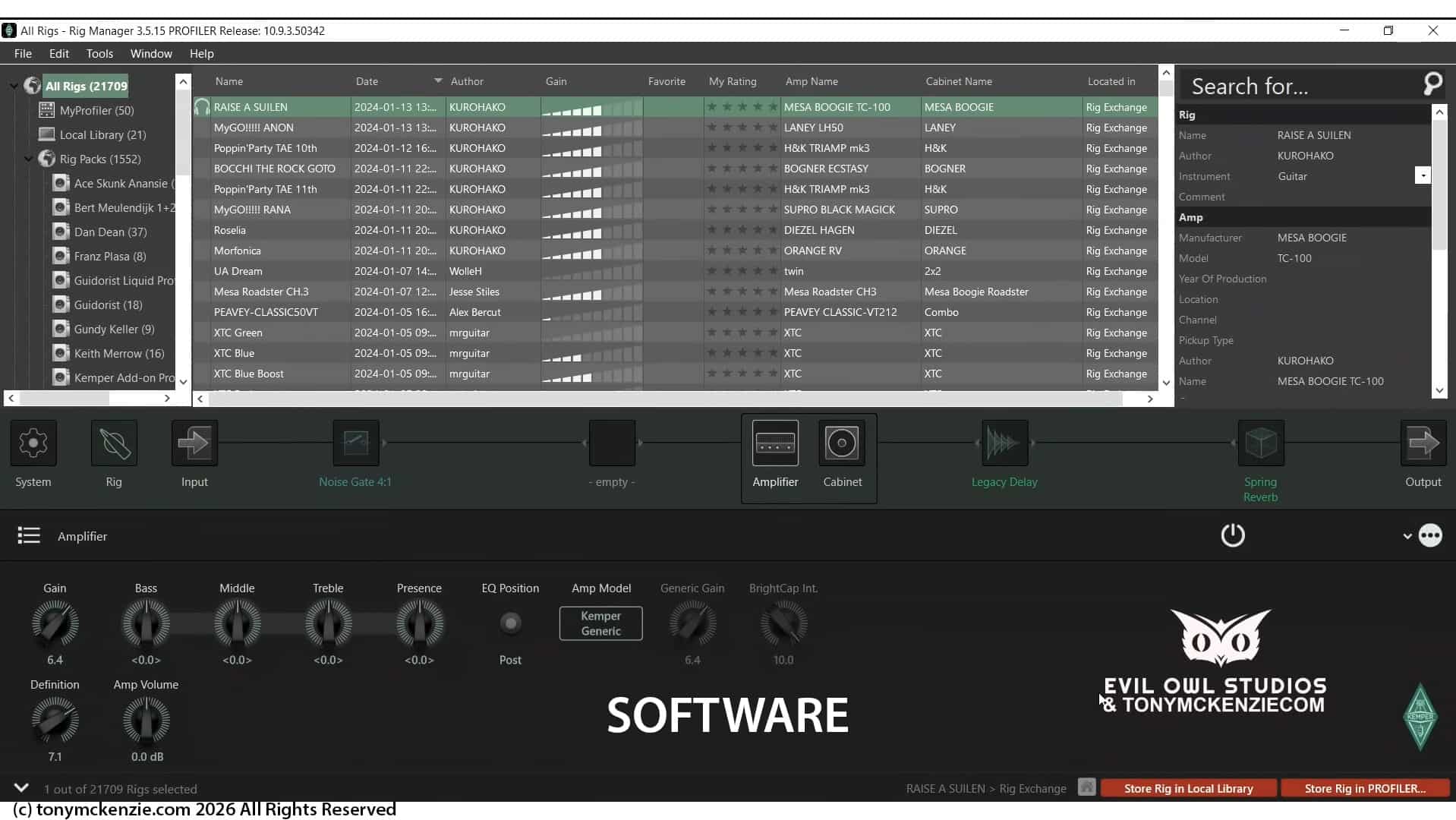
OK I hear you say right away - Tony that's an old version of the software! Version 3.5.15... release 10.9.3.50342... Calm down a little, this is NOT whatever you might think a training review. Of course you are right, its the version I used when I made the video review of the Kemper Profile Player. But as this software changes frequently, and this is really a sort of intro to the sort of software you might see when you download it, For what we need in this review it will suffice. Otherwise, check for the latest Kemper software on their website and that is version 14 that supports the V2 Kemper thing. Here's what an AI Bot said:
"The latest software for the Kemper Profile Player is the Profiler OS 14.0, which introduces the next-generation Profiling 2.0 technology. This update is a free software update for all Profilers, including the Profiler MK 2 Series and Profiler Player. It supports Profiling 2.0 creation and playback features, allowing users to create profiles with unprecedented accuracy and realism. The update includes features such as Authentic Gain Detection, Faithful Guitar-Level Response, Cabinet Resonance, and Smart DI Profiling. The Profiler Player can now create profiles in the same quality as its larger Profiler models, with over 100,000 individual frequency points analyzed for the most organic and authentic amp tone possible."
Maybe the bot stole that from somewhere but its a little about the V2 to whet your appetite or not!
Features of Rig Manager
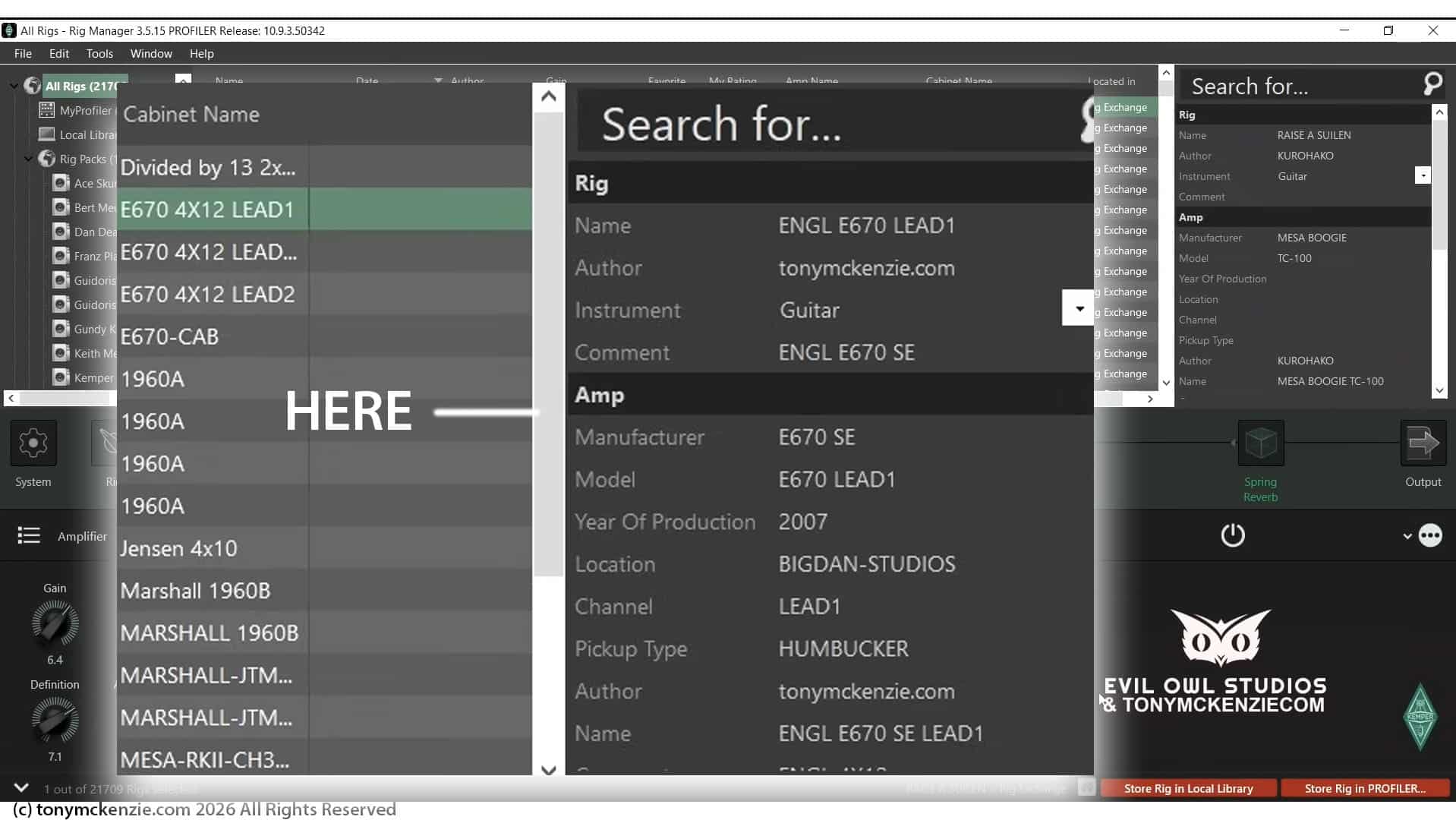
The basic sort of layout is shown in that larger view of the software I was using. So let's sum up the features and things you'll see in that version:
- On the left at that time there were 21,709 profiles to download. These cover from 10th December 2010 to now!
- Across the top menu you can import and export rigs, or backup the lot. It also supports impulse responses. Lastly there's a preferences tab.
- Remember you will need an account and to login to do this stuff!
- The edit menu does what it says on the tin! It edits profiles.
- Generally the tools backup and restore content. You can also export the profile tags to a CSV file (think Excel etc.
- The Window Menu opens the Editor or closes it etc.
- There is help, but remember its online!
- You can search for particular profiles from a box on the right of the screen - very useful. You can see your search results.
Just a bit on the profiles themselves. I made about 20 or so, but when you search for tonymckenzie.com others 'pop up'? Those are my original profiles that people have taken and resubmitted as theirs! However, the association with the originator (how I understand it) remains, hence you see those others.
Other useful things about a profile in the middle of the profiler editor include:
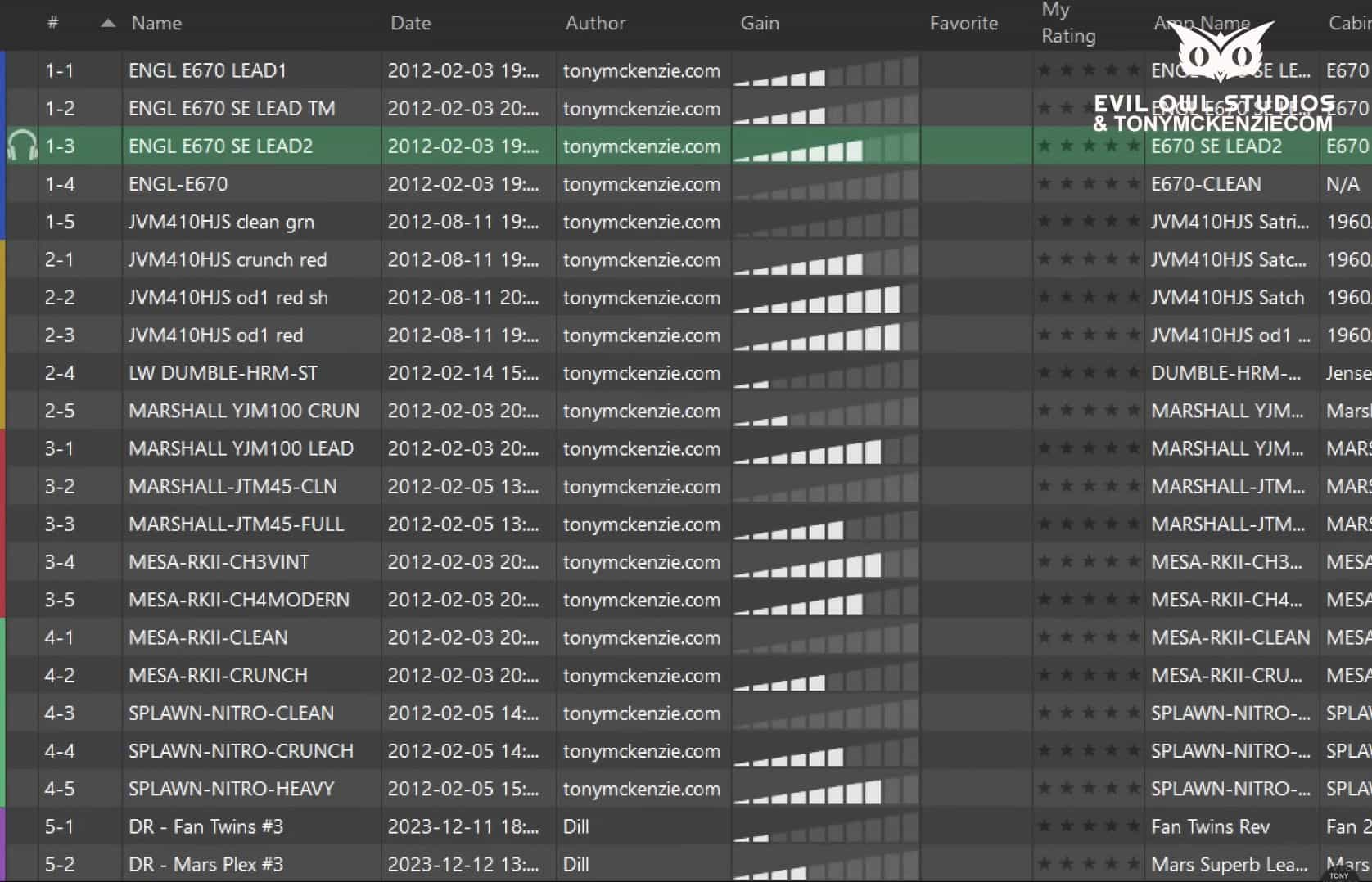
- Name, Date, Author, Gain, Favorite, My Rating, Amp Name, Cabinet Name and where located.
- I have a local library from that left side of the editor so its easy to see my original profiles. My rigs are al 2012 created and I don't have newer online.
- You can get a summary on the right of the screen if you choose a profile in the center profile section
On the bottom half of the screen is the audio path and how you edit it. I'm not covering this as its pretty much like most of the other editors out there and to be honest this review is way too long now! But you can also see the effects and a host of other stuff you can use easily enough. So let's leave the editor here and move on a little.
The Mobile Editor

Yep, you have a mobile editor. The installation of it on my iPhone was frankly easy compared to the likes of other software from other makers. The BT and network button needs to be 'on' and phone 'connected' so to speak and hey presto the software finds the hardware. Now hey listen up, the thing is, while this phone software installs and works OK, remember it IS a small screen (and I have the MAX iPhone screen size) and if you have any sight issues choose doing it maybe on an iPad (if it works!) and that problem goes away.
But you know what, the mobile phone software I liked and its perfect
for messing around without lugging other gear, and I guess that's
part of the overall advantage of the player when connected to this
platform. You can control most stuff with this little app so it gets
my vote as very good and if you get a player then I recommend you do
use this software, but the bigger screen the better. It's a good question, and if you just see one,
go on the internet and simply buy one, well this review would have helped
BEFORE you bought it! So Who is this Kemper Player For?
Taking a look at the back of this unit, I do think that Kemper made this player for guitarists - why do I think that? Well if you saw the section on I/O it clearly by the input has a little guitar icon right there. But I think that's rather misleading. You see, I think this is good for lots of musicians. While Bass guys are catered for no problem, plugging in an acoustic guitar, a keyboard or synth, using a microphone to input wind instruments - (no not a curry on Friday night!) and even inputting (maybe) a vocal might be useful in one way or another. Of course Kemper stick (it seems) to the guitar route but this device is capable of far more.
Whether you play gigs live, or you're a bedroom guy, or even in a studio like I have the Kemper profile player I think has a use, and thinking about the marketplace as it is currently, with that Tonex and surely other contenders coming in the space, I personally would still buy this player over and above other gear in this section. Sure I hear you, but Tony this can't profile an amp etc. and some of the competitors can blah blah woof woof (as Jimi Hendrix said). But you know what - that is almost irrelevant in the case of the Kemper player. Why? Simply because of those thousands and thousands of decent profiles (over 21000) captured since the end of 2011 to now - and there will be even more by now. What is the point of having a capture ability whey you (probably) wont capture as good as what's already there AND those profiles probably include every guitar amp known to man! In its own way its a veritable bargain if only you can see past the Tonex hype that is entirely cultivating what the fan boys will say is somehow 'better'. Its not!
And remember the V2 software etc. that might or might not have a big impact on this unit when you upgrade to newer versions of software.
What about Warranty?
From my investigations (I think) it has a 3 year warranty, I think I'm right, but if not do let me know and I'll update this. Along with the very good support and how well the player is actually made I don't think you have much to worry about. It's certainly better warranty and support than many devices I have checked since 2009.
And remember those guys on the Kemper forum, who are generally nice guys and helpful if you have any question of problem. Even Mr. Kemper goes on there occasionally, so as a way of support its great - unlike some forums I could name where they are nasty and antagonistic towards customers - the Kemper forum is such a refreshing change.
You know, what ever gear I review these days I
ALWAYS give a 'score' from 1 to 10 and here I reveal my opinion better than
words alone could say.What Score Do I Give The Kemper Profile Player?

You hopefully have read the entire review right? it's the ONLY way before you own a Kemper profile player that you will get an understanding of what you're letting yourself in for. And remember that V2 (I'll call it an upgrade but it's not really) and ongoing software that generally is a constant over the years you will have this player. While other companies do that too, Kemper certainly is no wimp at that and every software revision truly does give you something. So what's the score?

Yes the Kemper Profile Player gets a well deserved 10 out of 10!
But even with a ten out of ten score there are a few things that could easily (and may well have been by now) improved upon as follows:
- USB connections in the manual are a little difficult to understand what does what between the two - I know them, but new users might not.
- When I connected this to a PC and turned it on, I lost the use of the mouse and Wi-Fi immediately. They might have fixed that by now but it sure was there.
- When using rig manager for the first time - it can take towards 15 minutes to load those thousands of profiles - and I have a 1Gb fiber connection!
- Ratings for the profiles did not show up as I expected them to... basically blank on my laptop although there online.
- Copying some profiles in rig manager would not copy for a number of times, then magically they did copy.
- Even the power supply was 'OK' to me :)
So tis concludes the score section. One of the things I did was to download my
profiles from years ago and take a listen - How did they sound?So To The Music
Links in blue.
The above are the profiles that I show in the video review of the Kemper Profile Player and clicking the blue link you can go and watch the video and audio examples. I do show where possible in the video the actual amps I profiled and show you most of that sort of stuff. Maybe I'll create another video of the audio playing a few tracks rather than just noodling with those profiles who knows.
I also compared a Track I originally wrote from the Berner Street album called 'Tumblety' so you can see if there is a difference with this player against the original Tumblety track.
And remember that you CAN download all my published profiles from in the Rig Manager... just search for tonymckenzie.com in the search section and all my profiles can be yours for free.
My Kemper Rack inside and out video review
Converting the Kemper Rack to Powered Version
Having a Laugh About Kemper Gear (FocknRollers)
My FIRST Kemper Amp January 2012 Demo
Thank you for visiting my website. It takes me much time to create just one of these written reviews or video reviews, so please understand that. I make most reviews entirely unsponsored. This written review for example has taken me over 4 days + of work alone - and if you counted the video review I am on weeks of work.
Remember my reviews are there to help people, and while I am not always right (who is) I try very hard to offer a review like no other out there since 2009 onwards.
I look forward to your comments and if you have other info or tips or whatever just contact me from my contact form and I'll update/amend etc.
Thanks
Tony Mckenzie
© A B McKenzie 1997-2026. All Rights Reserved. All Trade Marks Acknowledged.